Timekeeping in the Heart of Southeast Asia: Thailand’s Country Time and Its Global Rhythm

Dane Ashton 4529 views

Timekeeping in the Heart of Southeast Asia: Thailand’s Country Time and Its Global Rhythm

Thailand operates on Thailand Country Time (ICT), a GPS-synced UTC+7, shaping everything from bustling Bangkok mornings to quiet countryside rituals in a country deeply attuned to precision and tradition. As a nation where cultural heritage meets 21st-century punctuality, Thailand’s timekeeping reflects its unique blend of Zen-like grace and rigorous daily discipline.

Travelers and locals alike move through Thailand’s daily schedule governed by Thailand Country Time (ICT), which aligns the nation with Southeast Asian neighbors while maintaining distinct national character. Adopted universally across business, education, and public services, ICT—officially known as UTC+7—eliminates the confusion of local solar time variations, enabling seamless coordination across time zones.

This uniformity supports Thailand’s robust economy, where early morning meetings in offices contrast with evening tek tam (markets lit by floating lanterns), all synchronized to the same clock.

GPS Synchronization and Real-World Punctuality

Dictated by official time standards, Thailand’s ICT rests firmly on UTC+7, derived from universal atomic time and adjusted via precise satellite signals. Unlike countries using daylight savings, Thailand maintains a steady, predictable rhythm year-round—a decision rooted in both practical efficiency and cultural preference for harmony with natural cycles. Urban centers like Bangkok and Chiang Mai exemplify this: trains depart on schedule at 6:00 AM, business dinners begin promptly at 6:30 PM, and school starts exactly at 08:00 sharp.

Even remote provinces adhere to this rhythm, ensuring national cohesion despite geographic and infrastructural diversity. “ICT is not just a time zone—it’s the pulse of Thailand’s daily life,” notes Dr. Nattapong P.

from Chulalongkorn University’s Department of Time and Society. “It’s how millions coordinate without slipping into ambiguity.”

Time Zones, Travel, and the Traveler’s Clock

While most of Thailand operates consistently on ICT, border regions reveal subtle adjustments. People near the Burmese or Laotian frontiers often experience minor discrepancies near timezone borders—places like Mae Sot show signs of daylight saving shifts during border commerce, though ICT remains the standard.

Tourists navigating Thailand’s clock expect strict punctuality; a 10-minute delay at Bangkok’s Suvarnabhumi Airport might disrupt connecting flights operated by real-time flight systems calibrated to ICT. “Travelers should align phones to ICT, not atomic clocks,” advises travel expert Somchai Limpapong. “Every red-time signal in Bangkok or every 5:30 AM Startup Day workshop starts with Thailand Country Time—no exceptions.”

Cultural Rhythms Embedded in the Clock

Beyond precision, Thailand’s timekeeping weaves into deep cultural patterns.

The traditional siesta, though rarely observed exactly at 13:00, echoes a cultural pace underscored by ICT’s structured flow. Religious observances, such as alms-giving at dawn (often timed around 06:00 local), merge with civil time to create a lay


Convoj - My Timekeeping Heart | Behance
The Toll of Tourism: Can Southeast Asia Save Its Prized Natural Areas ...
Printable Southeast Asia Map
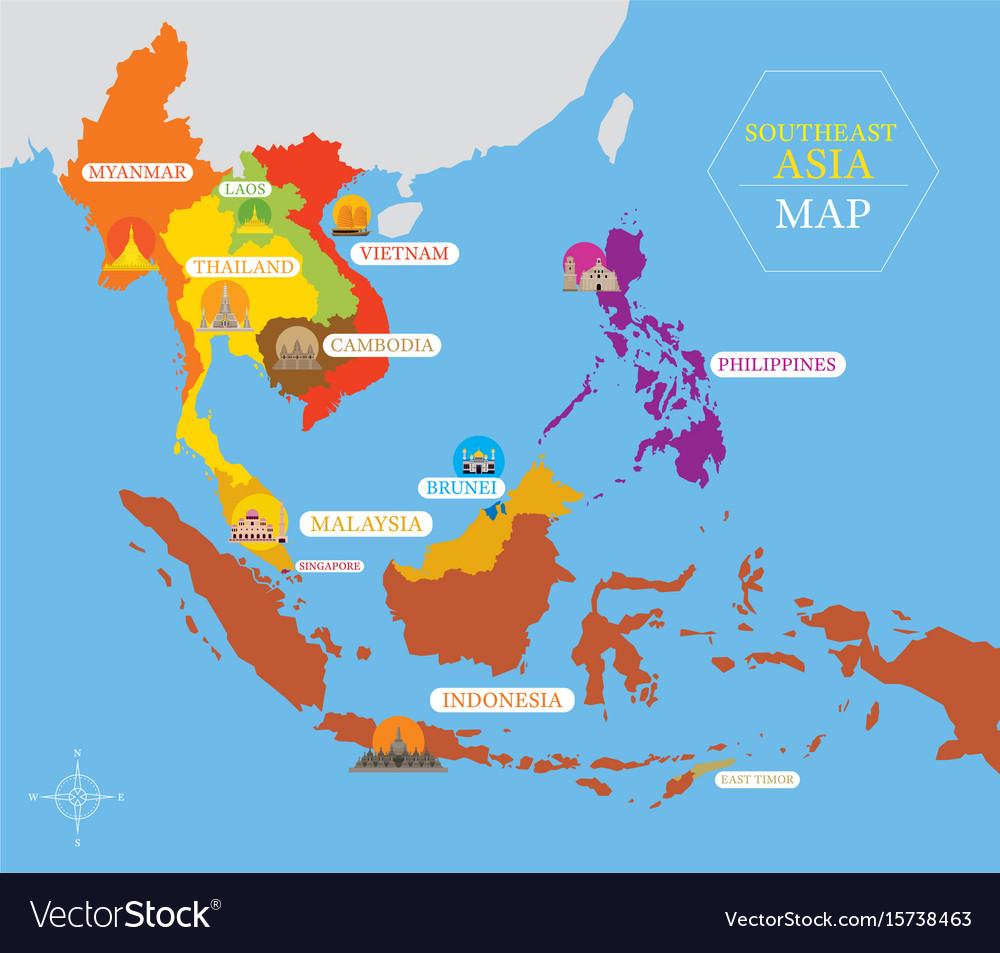
Southeast asia map with country icons and location

Paul Reubens: Peewee Herman’s Velocity Icon Dies at 70, Ends a Pub Crawl With Legacy That Endures</h2> In a twilight marked by both cinematic memory and untold facets of his life, Paul Reubens, the man behind the slobbery, eccentric, and outspoken Peewee Herman, passed away at 70. Known for redefining childhood rebellion on screen, Reubens’ death closes a chapter in American pop culture, one that blended vulgar humor with heartfelt authenticity. Once a household name from the 1980 hit film, his legacy extends far beyond the red-and-white striped shorts, now inseparable from the character who captured a generation’s cantankerous charm. <p>Born in Baltimore, Maryland, in 1952, Reubens emerged not just as an actor but as a performer unafraid of pushing boundaries. His embodiment of Peewee Herman—a defiant, snarly-haired antihero—blended physical comedy with sharp, streetwise dialogue that struck a chord with audiences hungry for authenticity. The Peewee Herman series, though commercially successful, often overshadowed Reubens’ broader artistic range. Few realize he appeared in Broadway plays, voice acting, and even avant-garde theater, proving his talents extended well beyond children’s television. As *Chicago Sun-Times* noted in its obituary, “Reubens was more than a child star—he was a performer who leveraged innocence into subversion.” <h3>A Career Built on Risk and Voice</h3> Reubens’ early career was defined by bold choices. Before Peewee, he starred in off-Broadway productions such as *The Spook Who Sat by the Door*, where his dramatic range simmered beneath the surface, hinting at complexity beneath the goof. With Peewee Herman, launched in 1985, he abandoned subtlety entirely: “Make them laugh, make them weird, make them remember,” Reubens once said, capturing the essence of his performative philosophy. The character’s signature voice—raspy, gravelly, dripping with sass—became iconic, a vocal signature recognized by millions. <p>The 1980s explosion of Peewee Herman’s films turned Reubens into a curious cultural paradox: a serious actor whose most beloved role was pure absurdity. Yet, in interviews, he insisted his performance was deliberate—a nuanced portrait of teenage defiance. “I didn’t play a cartoon character,” he explained. “I played a version of me—rough around the edges, protective of friends, screwed up, but loyal.” This authenticity resonated in an era increasingly skeptical of artificial corporate branding, making Peewee’s appeal timeless. <h2>Personal Life and Shadows Beyond the Spotlight</h2> Beyond the screen, Reubens navigated a life marked by both acclaim and private complexity. Always a confessed fan of rock ’n’ roll and jazz, his persona extended into music and visual art, though these pursuits rarely entered mainstream discourse. He resided in New York’s Greenwich Village, a neighborhood steeped in artistic tradition, maintaining long-standing friendships with peers across disciplines. <p>Despite the glare of fame, Reubens valued privacy fiercely. The Velvet Crimeoclub — a performance space and cultural hub — served as a sanctuary where he entertained trusted artists and writers. In rare public appearances, he spoke candidly of battling creative stagnation and the weight of typecasting, once remarking, “People remember the mask, not the man.” Such reflections humanized the performer, revealing layers beneath the red-and-white attire. <h3>Leadership, Mentorship, and the Legacy of Peewee</h3> Reubens’ influence reached beyond performance into mentorship. He supported emerging artists through workshops and collaborative projects, particularly those exploring boundary-pushing storytelling. The Peewee Herman Archive, now studied in theater programs, illustrates how he transformed personal quirks into universal themes of identity and belonging. <p>The character became a cultural touchstone, symbolizing youthful rebellion and resilience, but Reubens resisted reducing himself to a symbol. “Herman isn’t me,” he clarified in *Sun-Times* features, “he’s a story I inherited—and a story I continue telling, oddly enough, decades later.” This duality—public icon, private craftsman—defined his enduring presence. <h2>Enduring Impact: Why Peewee Herman Still Slaps the Nerve</h2> Even after the curtain fell, Peewee Herman retains pulse in internet memes, fashion revivals, and genre homages. His snarl, “You ya ridiculous—bury me!” echoes in viral clips and social commentary. Yet Reubens’ true legacy lies not in viral fame but in the authenticity he brought to every role. <p>Critics and fans alike praised his ability to fuse humor with emotional truth. As theater historian Dr. Elena Park observed, “Reubens taught audiences that vulnerability and absurdity coexist. He made slobberness feel sincere.” Whether in a Intervals show, a Broadway curtain call, or a private art session, Paul Reubens remained fundamentally creative—too often typecast, never fully understood. <h1>Paul Reubens, Peewee Herman’s Velocity Icon Dies at 70 — Ends a Velocity Legacy That Never Grew Old

close